Invisalign vs. Traditional Braces: Which Is Right for Little Rock Adults?

More adults are straightening their teeth than ever before, and it is not just about aesthetics. Crowded or misaligned teeth are harder to clean properly, which over time contributes to cavities and gum disease. At Dental Solutions of Little Rock, one of the most common questions we get from adult patients at both our Chenal Parkway and Baptist Health offices is simple: should I get Invisalign, or traditional braces?
There is no universal right answer. It depends on your bite, your lifestyle, and honestly, your personal preferences. Here is how the two options actually compare.
Understanding Invisalign And Traditional Braces
How Traditional Braces Work?
Traditional metal braces use brackets bonded to each tooth, connected by a wire that is gradually tightened over time to shift teeth into position. They have been the standard orthodontic treatment for decades, and for a reason: they are highly effective, particularly for more complex bite issues involving significant rotation or severe crowding.
The tradeoff is visibility and daily maintenance. Braces require more careful brushing and flossing around brackets, and there are some dietary restrictions, like avoiding sticky or hard foods that could damage the wires.
How Does Invisalign Work?
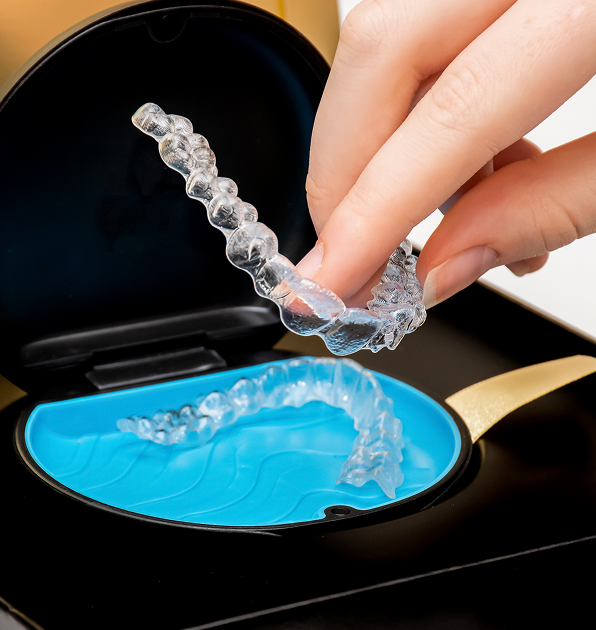
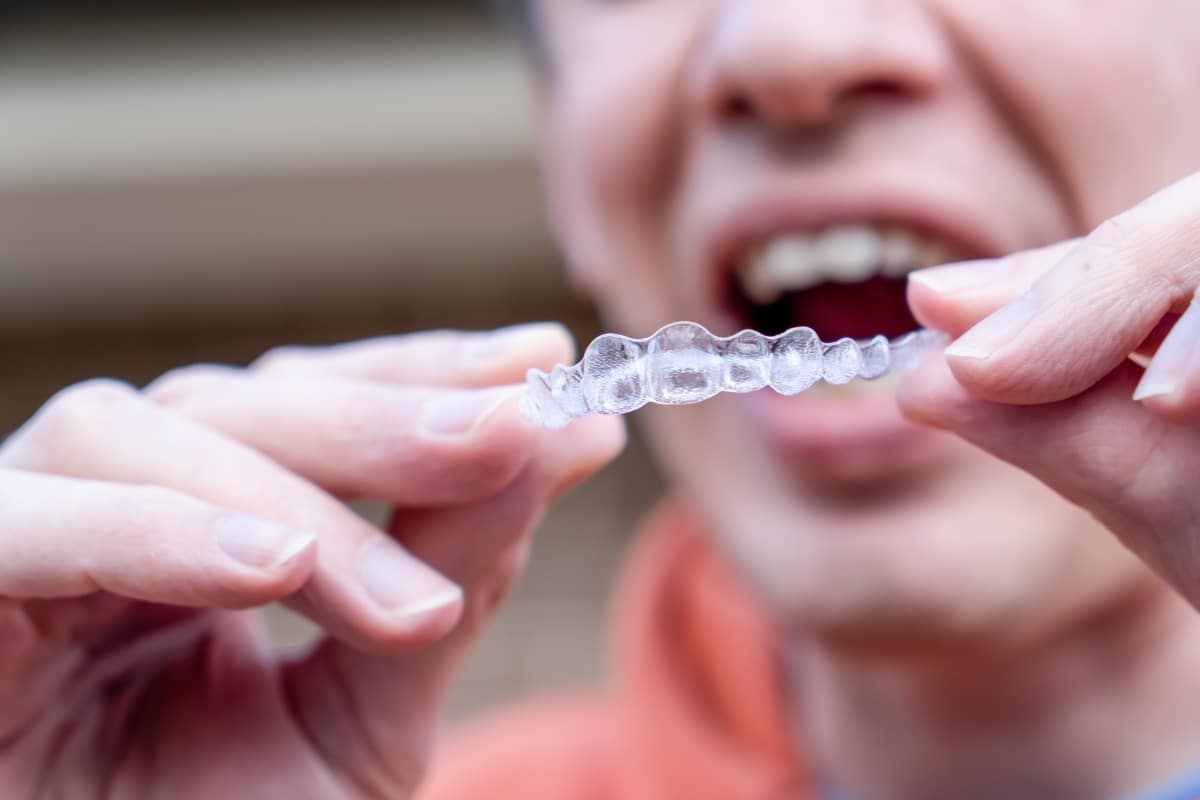
Invisalign uses a series of clear, custom-made aligners that gradually move your teeth, changing to a new set roughly every one to two weeks. Because the aligners are removable, you take them out to eat, brush, and floss normally, then put them back in for at least 20 to 22 hours a day.
For many of our adult patients in Little Rock, particularly those in client-facing careers, the appeal is obvious. The aligners are nearly invisible, and there is no metal to catch on soft tissue or draw attention in meetings and photos.
Comparing the Two: What Actually Matters
Appearance: Invisalign aligners are clear and far less noticeable. Traditional braces are visible, though ceramic or tooth-colored brackets can reduce that somewhat.
Comfort: Aligners are smooth plastic with no wires or brackets to irritate your cheeks and lips. Traditional braces can cause more soft tissue irritation, especially right after adjustments.
Removability: This is the biggest lifestyle difference. Invisalign comes out for meals and cleaning. Braces are fixed in place for the full treatment period, which some patients actually prefer, since there is no discipline required to keep aligners in for the recommended hours each day.
Treatment complexity: Traditional braces generally handle more severe orthodontic issues, like significant bite misalignment or rotated teeth, more predictably than aligners. Invisalign works very well for mild to moderate crowding, spacing, and bite issues, but a complex case may still call for braces.
Maintenance during treatment: Both require good oral hygiene, but braces demand more attention to detail around brackets and wires to avoid plaque buildup and white spot lesions.
Treatment time: This varies significantly by case rather than by which option you choose, but many adult Invisalign cases move at a comparable pace to braces for mild to moderate corrections.
What We Consider Before Recommending One or the Other
During your consultation, Dr. Leslie Monroe, Dr. Caroline Mehaffy, or Dr. Camella Card will evaluate your bite, the degree of crowding or spacing, and your overall oral health before recommending a direction. We will also ask about your lifestyle honestly. If you know you will not reliably wear aligners for the required hours each day, traditional braces may actually get you a better result. If you have a career or lifestyle where visible metal brackets are a real concern, Invisalign is often the better fit.
A Note on Cost
Cost for both options tends to be similar overall, though it varies based on the complexity of your case and length of treatment. We walk through the full cost breakdown, along with financing options, during your consultation so you can make the decision with complete information.
Why This Decision Deserves a Real Conversation
We have seen plenty of adult patients come in already convinced they want Invisalign, only to learn during the exam that their bite issue is better suited to braces, or vice versa. This is not a decision to make from a Google search alone. A proper exam, including X-rays and a bite evaluation, is the only way to know which option will actually get you the result you want.
Frequently Asked Questions
1. Can adults get Invisalign at any age?
Yes, there is no upper age limit for Invisalign. Many of our adult patients in their 40s, 50s, and beyond have had great results.
2. Does Invisalign work as well as braces?
For mild to moderate cases, yes. For more complex bite corrections, traditional braces sometimes remain the more predictable option.
3. How often do I need to wear my Invisalign aligners?
At least 20 to 22 hours per day for the treatment to progress on schedule.
4. Will my dental insurance cover orthodontic treatment?
Many plans offer at least partial orthodontic coverage. Our team can help verify your specific benefits before you begin treatment.
Ready to find out which option is the better fit for your smile? Dental Solutions of Little Rock is always ready to help you out. Schedule a consultation by visiting our official website.