Save Natural Tooth vs Dental Implant: Which Is the Right Choice for You?


Facing the possibility of losing a tooth or already dealing with one that’s severely damaged can feel overwhelming. You may be asking yourself: Is it worth trying to save this tooth, or should I just get an implant? It’s one of the most common dilemmas patients bring to our team at Dental Solutions of Little Rock, and there’s no one-size-fits-all answer.
Understanding your tooth restoration options is the first step toward making a confident, informed decision. When weighing save natural tooth vs dental implant, both paths have real benefits and real trade-offs. This guide breaks it all down for you in plain language.
Why Your Natural Tooth Is Always Worth Considering First
There’s a reason dentists say “nothing replaces a natural tooth.” That’s not just a saying it’s backed by biology.
Your natural teeth have roots embedded in your jawbone. Those roots provide constant stimulation that keeps the bone healthy and strong. When a tooth is lost, that stimulation disappears, and over time the jawbone can begin to shrink a process called bone resorption.
Beyond bone health, natural teeth also offer:
- Superior bite feel and pressure distribution
- No surgical recovery time
- Lower upfront cost in many cases
- A familiar, comfortable fit
If there’s a viable path to saving your tooth, most dental professionals including our team in Little Rock, AR will recommend exploring it first.
When Saving Your Natural Tooth Makes Sense
Several tooth restoration options exist that can preserve a damaged or decayed tooth. The right one depends on how much of the tooth structure remains and the health of the surrounding tissue.
Root Canal Therapy
When the inner pulp of a tooth becomes infected or inflamed, a root canal removes the damaged tissue and seals the tooth. Contrary to popular belief, modern root canals are no more uncomfortable than getting a filling.
A root canal followed by a crown can extend the life of a tooth by decades sometimes a lifetime.
Crown Placement
If a tooth is cracked or weakened but the root is healthy, a dental crown can cap and protect it. Crowns are custom-made to match your surrounding teeth and restore full function.
Periodontal Treatment
Sometimes the issue isn’t the tooth itself but the supporting gum and bone tissue. With professional deep cleaning and periodontal therapy, many patients are able to stabilize their teeth and avoid extraction.
The bottom line: If your tooth has a healthy root and enough remaining structure, saving it is often the most conservative and cost-effective option.
When a Dental Implant Becomes the Better Option
There are situations where saving a tooth simply isn’t feasible. In those cases, replacing missing teeth with a dental implant is widely regarded as the gold standard in modern dentistry.
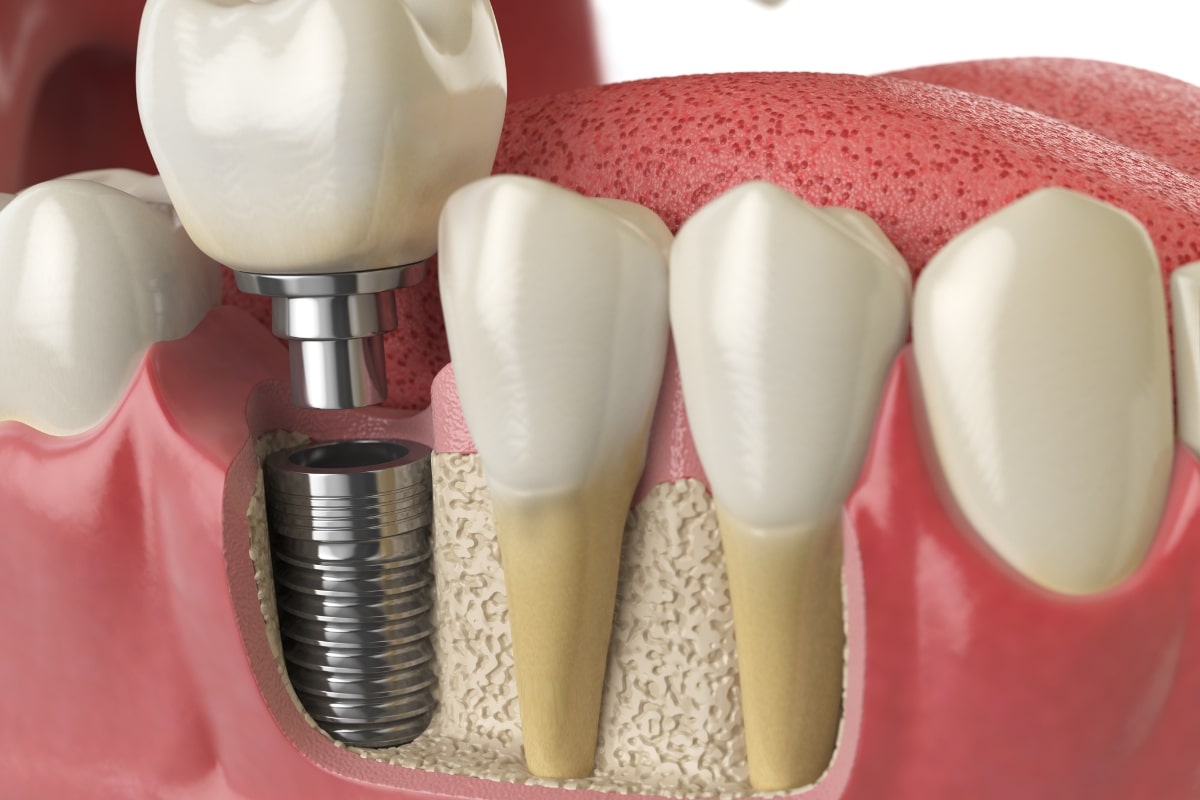
A dental implant is a small titanium post surgically placed into the jawbone. It acts as an artificial root and is topped with a lifelike crown that blends seamlessly with your natural teeth.
Dental Implants May Be the Right Choice When:
- The tooth is severely fractured below the gumline
- The root is too damaged or infected to be saved
- Bone loss has compromised the tooth’s long-term stability
- The cost of repeated treatments outweighs that of an implant
- You’ve already lost the tooth and need a permanent replacement
One of the greatest advantages of implants is their longevity. With proper care, a dental implant can last 20–30 years or longer. They also prevent the bone loss that typically follows tooth extraction.
Save Natural Tooth vs Dental Implant: A Side-by-Side Comparison
| Points | Natural Tooth (Restored) | Dental Implant |
|---|---|---|
| Feel & Function | Most natural | Closely mimics natural tooth |
| Recovery Time | Minimal | Several months (osseointegration) |
| Longevity | Variable; depends on tooth health | 20–30+ years with proper care |
| Bone Preservation | Yes | Yes |
| Cost | Often lower upfront | Higher upfront; cost-effective long-term |
| Success Rate | High when tooth is viable | 95–98% success rate |
Factors Your Dentist Will Evaluate
When you come in for a consultation, our team assesses several key factors before recommending a treatment path:
- Extent of decay or damage: How much healthy tooth structure remains?
- Root integrity: Is the root intact, cracked, or infected?
- Bone level: Is there enough bone to support the tooth or an implant?
- Overall oral health: Are gum disease or other issues present?
- Patient health history: Certain conditions or medications may affect healing.
- Long-term prognosis: Even if a tooth can be saved today, how long will it realistically last?
This thorough evaluation is what allows us to give you a recommendation that’s truly in your best interest not just what’s easiest or most profitable.
The Financial Side of the Decision
Cost is a real consideration, and it’s okay to factor it in. Here’s a general picture:
- Root canal + crown: Typically ranges from $1,500–$2,500 depending on the tooth and complexity.
- Dental implant (single tooth): Generally runs $3,000–$5,000, including the post, abutment, and crown.
However, a tooth that requires repeated treatments over several years may ultimately cost more than an implant would have. Your dentist can help you weigh these scenarios based on the realistic lifespan of the restored tooth.
At Dental Solutions of Little Rock, we’re happy to walk you through your insurance coverage and financing options so cost doesn’t stand in the way of your best care.
Making the Right Decision for Your Smile
Ultimately, the choice between saving a natural tooth and choosing a dental implant comes down to what’s best for your oral health, your budget, and your long-term quality of life. Neither option is universally better but with the right information and a trusted dental team, the right choice for you becomes much clearer.
If you’re dealing with a damaged, infected, or missing tooth and aren’t sure which path to take, we’re here to help. Schedule a consultation at Dental Solutions of Little Rock today. Our experienced team will review your X-rays, explain your options honestly, and help you move forward with confidence.
📍 Dental Solutions of Little Rock | Little Rock, AR 72205 📞 Call us or book online to schedule your appointment today.
Questions Patients Often Ask Us
Will a root canal weaken my tooth permanently?
A root canal removes the inner pulp, which can make the tooth slightly more brittle over time. That’s exactly why it’s typically paired with a crown to protect and reinforce the tooth so it functions normally for years to come.
How long does a dental implant take from start to finish?
The full process usually takes 3–6 months. After the titanium post is placed, it needs time to fuse with your jawbone (a process called osseointegration) before the permanent crown is attached. Some patients qualify for same-day implants depending on their bone density and overall health.
Is a dental implant painful?
Most patients are surprised by how manageable the procedure is. Local anesthesia is used during placement, and any post-procedure soreness is typically mild and resolves within a few days. Many patients compare the recovery to that of a tooth extraction.
What if I wait before deciding?
Waiting too long can limit your options. An untreated infected tooth can spread bacteria to surrounding teeth and bone. Similarly, once a tooth is lost, the jawbone begins to shrink relatively quickly which can make implant placement more complex down the road. It’s best to get evaluated sooner rather than later.
Can I get an implant if I’ve already had bone loss?
In many cases, yes. Bone grafting is a procedure that rebuilds lost bone and creates a stable foundation for an implant. Not every patient needs it, but it’s a well-established option for those who do. Your dentist will take detailed imaging to assess your bone levels before recommending a plan.